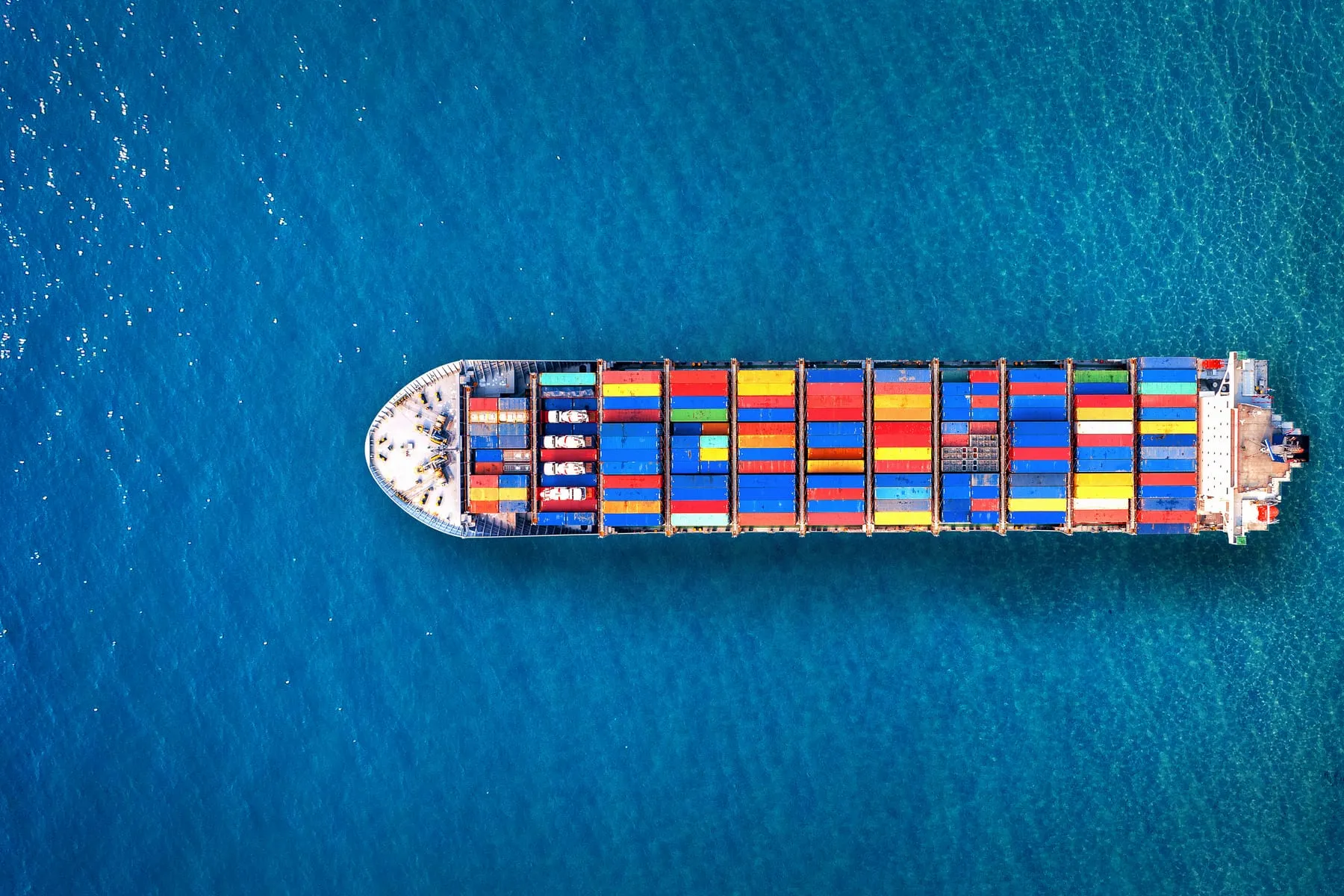
Co-marketing content with maritime industry partners
Done well, co-marketing with maritime partners doubles a brand's reach without doubling cost. Done badly, it produces orphaned content nobody owns. Here's the difference.

Co-marketing in maritime, when it works, is some of the highest-impact content investment a brand can make. Two partners with adjacent, non-competing audiences pool their reach, share the production cost and end up with assets that travel further than either could produce alone. When it doesn’t work, both partners end up with mediocre assets, undeveloped relationships and an unwillingness to try again.
The difference is mostly in the planning.
The maritime co-marketing patterns that work
Three patterns consistently produce strong outcomes.
The class society and operator pattern. A class society (DNV, Lloyd’s Register, ABS, BV, ClassNK) co-produces content with a major operator or ship manager. The class society brings regulatory and technical authority. The operator brings real operational data. The output, joint reports on CII implementation, ballast water performance, decarbonisation strategies, gets cited far more than either party could produce alone.
The vendor and consultancy pattern. A software vendor (fleet management, port community systems, voyage data analytics) co-produces with a consultancy or advisory firm. The consultancy brings buyer-facing relationships and credibility. The vendor brings the data and product depth. The output is usually a buyer’s guide, RFP framework or selection criteria piece.
The complementary-vendor pattern. Two non-competing vendors serving the same buyer at different decision points. A bunker supplier and a CII compliance consultancy. A maritime insurer and a vessel inspection technology firm. The buyer hears both names from one trusted source.
The patterns that don’t work
Three failure modes show up repeatedly.
The asymmetric-audience co-marketing. One partner has a list of 30,000 maritime contacts; the other has 2,000. The bigger partner does most of the audience-side work. Resentment builds. The next collaboration never happens.
The competitor-adjacent co-marketing. Two ship managers. Two BWMS suppliers. Two port community system vendors. The buyer reading the asset can’t tell what they’re meant to do with the information. The asset reads as confused.
The unowned co-marketing. Both partners assume the other is leading. The brief never gets written. The asset slips by months. Eventually a thin version ships and nobody promotes it because nobody feels ownership.
The agreement that prevents most failure modes
Before any co-marketing project starts, write down four things.
1. The audience promise. Both partners agree to promote the asset to a defined slice of their list, in a defined channel, by a defined date. “We’ll both promote it” is not enough. “Partner A sends a dedicated email to its 4,500-segment fleet manager list in week two; Partner B includes it as the lead newsletter item in week three; both run two LinkedIn posts each in the first month” is the level of specificity that protects the relationship.
2. The lead-handling protocol. Who gets the leads, what they can do with them, how the data is shared. Standard model: both parties get the leads, both can contact, both treat them as standard ICP-fit prospects. Variations exist; they need to be agreed upfront.
3. The single named owner per asset. One person, one partner, owns delivery. The other partner contributes but doesn’t drive. Co-ownership of individual assets reliably produces missed deadlines.
4. The kill date. If the asset isn’t shipped by [date], the project pauses for review. Without a kill date, half-finished co-marketing assets sit in shared drives forever.
The economic case
A typical maritime co-marketing project, done well, produces:
- One major asset (report, webinar, deep-dive piece).
- Three to five derivative assets (carousels, clips, follow-up posts).
- Two to four months of sustained joint distribution.
- Twice the reach into the partner’s audience that either party could have achieved alone.
The cost-per-quality-impression on co-marketed assets is usually lower than any other format in the maritime content programme. The constraint isn’t economics; it’s finding partners who will run the planning seriously enough to make it work.
The brands that get this right develop two or three deep co-marketing relationships and run one major joint project per partner per year. The brands that don’t run dozens of shallow conversations that never produce assets. The relationship discipline matters more than the partner count.
Frequently asked questions
Which maritime partners are best to co-market with?
How should the work be split?
Who owns the leads from co-marketed content?
More on Content Marketing
-

Content Marketing
The 18-month curve: when content marketing actually starts paying back
Maritime content marketing follows a predictable payback curve, and brands that abandon at month nine miss the entire compounding window.
 By Nathan Yendle
 -

Content Marketing
Content frameworks for marine equipment manufacturers
Marine equipment manufacturers face content challenges shipping lines and ship managers don't. Here are the content frameworks that consistently work.
By Nathan Yendle -
Content Marketing
Content KPIs that matter in long-cycle maritime sales
Most marketing teams measure content with the wrong KPIs for maritime sales cycles. Here are the KPIs that actually correlate with pipeline and revenue.
By Nathan Yendle